
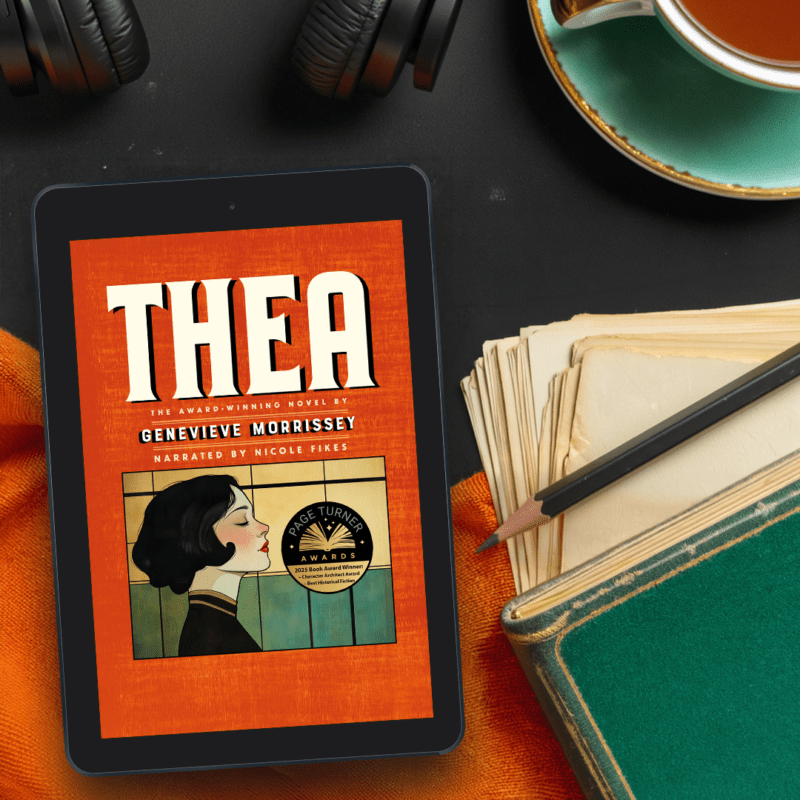
Poverty, prejudice, her mother’s addiction…in her quest for an education, 15-year-old Thea tries to navigate them all. But will a secret ultimately undermine her efforts?
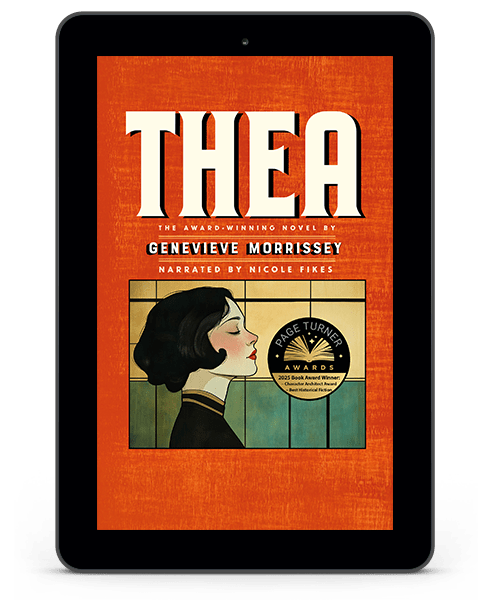
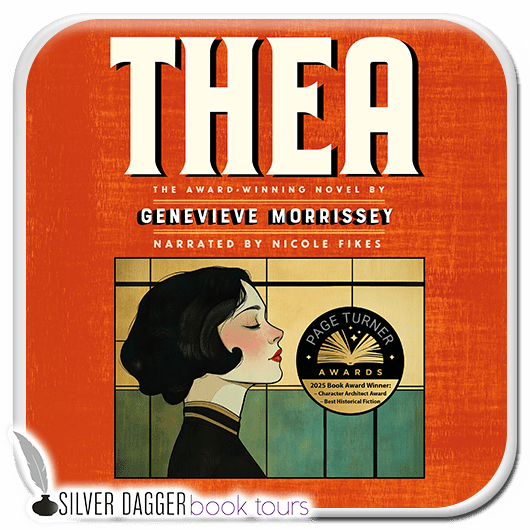
Thea
by Genevieve Morrissey
narrated by Nicole Fikes
Genre: YA Historical Fiction
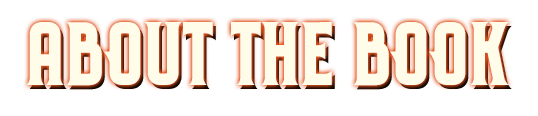
2025 Page Turner Book Award winner for Best Historical Fiction & Character Architect Award
Oklahoma City, 1925
Fifteen-year-old Thea Carter lives in a small garage apartment—Thea’s seventh “home” in four years—provided by her alcoholic mother’s employer, the morose and enigmatic Dr. Hallam.
School is Thea’s refuge and she’s an excellent student, but the parasitic Mrs. Carter’s instability continually threatens her dream of getting a high school diploma. In an effort to keep her mother employed and the two of them housed, Thea secretly takes on much of her mother’s work while at the same time navigating adolescence, friendships, and first love.
Dr. Hallam, impressed by her drive and intelligence, becomes Thea’s unexpected ally, but in addition to wealth and position, the doctor also has a secret that could ruin him, and shatter his bond with Thea.
“Morrissey crafts a wise and moving coming-of-age historical novel with resonant contemporary themes, meticulous period detail, and flawed but sympathetic characters who will win readers’ hearts… Lovers of historical fiction and coming-of-age stories will relish time spent with Thea.” —BookLife ‘Editor’s Pick’ review
“Thea is a coming-of-age tale with a lot of heart and charm… Morrissey’s characters truly leap off the pages.” —Readers’ Favorite review
“The story is one of friendship and found family, with a heartwarming conclusion… THEA is a moving historical coming-of-age novel whose characters’ compassion and empathy inspires.” —IndieReader review
**Now available as an audiobook!**
Audible * Amazon ebook * Bookbub * Goodreads



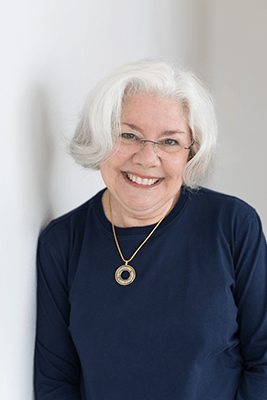
Thea is the new historical novel by Genevieve Morrissey, author of the award-winning Marriage & Hanging and the popular Antlands science fiction series. She is an avid student of British and American social history who, through one of those strange little quirks of fate, spends most of her days talking with scientists. In addition to writing, Genevieve enjoys reading obscure books, travel, and solitude.
Website * Facebook * X * Instagram * Bluesky * Bookbub * Amazon * Goodreads

Stuff About Me:
First—I’m not young. Luckily for me, writing isn’t something that requires youth, quick wits, or agility.
I always wanted to be a writer, and I always wrote, but for many years I wrote only for myself. I was sure any criticism of my work would absolutely crush me. I hardened up a little in my middle years and started letting a few people close to me read my books, but even then, I wasn’t brave enough to submit any work to the judgment of the public until the pandemic came along. Then, quarantined and bored out of my mind, I finally took the leap with Antlands and discovered the public I’d been afraid of was actually almost universally kind.
Beyond that, I was born in the usual way, raised in a conventional nineteen-sixties household in southern California, and educated in public schools. I majored in Classical Studies at the University of California, San Diego, but afterwards forgot all the Latin and Greek I’d learned so quickly I was forced to conclude I’d never really learned them at all. After graduation my interest turned from ancient to more recent history, and particularly to American and (to a lesser extent) British social history. I’ve been immersed in that subject for more than forty years now, which has resulted in my accumulating hundreds and hundreds of books with faded bindings and a strong odor of mildew. At this point I’m pretty mildewed myself, not to mention something of a museum-piece for having been married to the same man for more than half a century. He’s a biochemist, which means you may trust that any science in my books has been thoroughly vetted.
Are Your Characters Based on Real People…?
All my characters are real people I know, or composites of several real people. I don’t have a good enough imagination to create a totally original personality.
In the case of THEA, for example, Thea’s mother, Grace, is based largely on my own mother, except that my mother suffered from mental illness rather than alcohol addiction. Like Thea, my mother was a high school student during the 1920s, graduating on the eve of the Depression, and I based Thea’s high school experiences on Mom’s.
Unlike Thea Carter, my mother’s life unfortunately had no Dr. Hallam in it. I was luckier, and THEA was partly written as a tribute to him. Thea herself was based on a contemporary of mine who I admired, and as with all my books (THEA is the sixth I’ve published) minor characters are all amalgams of friends and acquaintances, some of whom recognize themselves and some of whom don’t. My books’ villains are always old enemies of mine, and in the first five drafts, at least, I make them suffer.
What Did You Edit Out…?
As a child, I read all of Charles Dickens’ works.
What I mean by that is that my mother had a lavishly illustrated boxed set of the works of Charles Dickens and in childhood I pored over the pictures, devoured the dialogue, read most paragraphs of six lines or less—and shamelessly skipped all the rest. Later in school, when I was forced to read every word of David Copperfield, I concluded that my earlier choice had been the correct one.
Bad examples can be as useful as good ones. Based on this early research, I try to edit out anything in my books that doesn’t keep the plot marching smartly along, avoid long descriptive passages, and cap the number of characters at fewer than twenty. Deaths and scenes of death-beds are usually limited to one per book (and I try not to make them pathetic).
In early drafts of THEA, Grace Carter had a backstory; Dr. Hallam had a backstory (a long one); Thea herself had more backstory; and in general, all the characters got up to a whole lot more stuff than made it into the final version of the book. In fact, I probably excised an amount equivalent to double what ultimately remained. This is about usual with me, and I believe every cut made the final story better.
Who designed your book covers?
All of my covers except one are the work of Mark Thomas of Coverness. I love them all, and I think the cover of Thea is his best yet.
The cover of The Complete Raffles, Annotated and Illustrated is the work of Sarah Morrissey, and features an image of Raffles painted by J.C. Leyendecker.
Advice I would give new authors?
I find that people are very free about giving advice to writers. The only piece I ever got that I consciously took is this:
First—write a book (or play, or story, or poem, or whatever your thing is).
Second—revise what you wrote. Revise it again. Revise it again. Revise it until you’re sick of looking at it. Revise it some more. Keep revising it until every sentence is as perfect as you can make it.
Third—open the bottom drawer of your desk and drop your manuscript into it.
Fourth—close the drawer. If you feel like slamming it, go ahead.
Fifth—repeat steps one through four until one day when you open the bottom drawer to drop in your manuscript, you find the drawer full. At this point—and not before—you may proceed to step six, which is to attempt to get your latest work published.
I got this advice (I don’t remember from whom) in a time when people still had desk drawers and manuscripts on paper that could be dropped into them, but as that’s usually no longer the case, a contemporary version of this advice might go:
Step one—measure and calculate the volume of an old-fashioned bottom desk drawer. Measure and calculate the volume of a manuscript printed on 81/2 by 11-inch paper. Calculate how many manuscripts of the calculated volume would be required to reach the maximum capacity of said drawer.
Proceed with old steps one through four until the number of virtual manuscripts you have completed is enough to fill the virtual drawer.
Then continue to step five.
If you are math-avoidant, it may serve as a rough estimate for you to know that my desk drawer—actual, not virtual—was filled by Attempted Book Number Eight. Book Number Nine was Antlands, which sold very well, so I think the drawer-filling technique worked very well in my case.
Do you believe in writer’s block?
Yep. With as much conviction as I believe in gravity. Just keep writing.
Pen, typewriter or computer?
I’m so old I’ve written books with all three. I like my computer best because it makes revisions so easy I have no possible excuse to stint on revising.
How long on average does it take you to write a book?
At first, five years. Then three. Then two. To write THEA took only one. As with any skill, practice is everything.
Who did the narration on the audiobook and what made you choose them?
More than in any other book I’ve written, I wanted to portray the characters in Thea as products of their environments. Thea Carter, the protagonist and narrator of the story, is an Oklahoma girl, so I felt like the perfect audiobook would be one performed by an actor with an Oklahoma accent. But could I get one? I didn’t think a generic “southern drawl” would do. Oklahoma isn’t the Deep South. The experiences and attitudes of a girl born and reared in the Deep South during the 1920s would have been very different from those of a girl raised in Oklahoma City. Consequently, when I opened the audiobook project for auditions, I specified either an Oklahoma, or failing that, a neutral accent.
I should have bought lottery tickets that day, because my luck was certainly in. Almost the first audition I received was from Texan Nicole Fikes, who is was so perfectly familiar with the Oklahoma accent that listening to her read her audition instantly brought back my own!
Nicole turned out to be an excellent actress, able to perfectly convey things like Thea’s mix of youth and premature world-weariness, her mother’s deteriorating condition, and Dr. Hallam’s gradual recovery from depression, using only her voice.
I have the good fortune to be able to say that my audiobook’s narration is exactly how I hoped it would be.
Did you have to adjust/change anything in the book before getting it narrated?
I didn’t adjust or change anything from the written version of Thea before getting it narrated. The words Nicole Fikes reads are exactly the ones I wrote, slightly adjusted—by Nicole; not me—to reflect the Oklahoma habit of, for example, dropping the final “g” of most “—ing” endings. Maybe I should have changed more, but I thought it might be unfair to people who read physical books for the audio version to have different content.
Follow the tour HERE for special content and a giveaway!
Apr 7
Kickoff at Silver Dagger Book Tours
Apr 8
IS HISTORY THE AGREED UPON LIE? Historical Fact & Historical Fiction.
Apr 9
Apr 10
Sarcastically Yours, Jen – REVIEW
Apr 11
Book Bites….with a side of coffee
Apr 12
Apr 13
☼ A Place In The Spotlight ☼ with M.C.V. EGAN
Apr 14
Book Reviews by the Reluctant Retiree
Apr 15
Wibell’s Worlds – GUEST POST
Apr 16
Apr 17
WMC Book Corner – YouTube channel
Inside the Insanity – GUEST POST
Apr 18
Boys’ Mom Reads! – REVIEW
Apr 19
Apr 20
Apr 21
Stormy Nights, Books and Blogging
Looking for more awesome book tours and giveaways to enter?
Check out the rest of the Current Tours!


Looks very exciting
Thank you!
I love reading historical fiction.
This sounds so interesting! I'd love to.read it